North Karelia, Finland: travel guide for first-time visitors
Updated 16 November 2026

North Karelia (Pohjois-Karjala in Finnish) is Finland's easternmost region: a landscape of lakes, forested hills and small towns along the border with Russia. It suits travellers who want quiet nature, long walks, lake views and a taste of Karelian culture without big crowds. The regional centre is the university city of Joensuu, and the best-known sight is Koli National Park above Lake Pielinen. This guide gives a practical overview of the region, how to reach it and how to plan your stay.
What kind of region is North Karelia?
Most of North Karelia is forest and water. Large lakes such as Pielinen, Höytiäinen and Pyhäselkä shape the scenery, and the hills of Koli rise above them. Villages are small and distances between them are long, so the region feels spacious and calm.
Karelian culture is visible in Orthodox churches and chapels, in traditional log houses, in poetry and folk music traditions, and in the food. Joensuu has an Orthodox cultural quarter, and Ilomantsi and Nurmes have Karelian-style villages built to present this heritage.
The region is a border area. Finland's land border with Russia runs along its eastern edge, and all crossing points on the eastern land border have been closed to travellers since December 2023. You cannot continue to Russia from here, so plan your trip as a Finland-only visit.
The 13 municipalities at a glance
North Karelia has 13 municipalities, five of them towns (Joensuu, Kitee, Lieksa, Nurmes and Outokumpu). Each has at least one reason to stop:
- Joensuu – the regional city, with the Botania tropical garden, the Orthodox cultural quarter and Museo Eliel in the old town hall designed by Eliel Saarinen. See the Joensuu city guide.
- Lieksa – the village of Koli and Koli National Park (part of the park extends into Joensuu and Kontiolahti), and the Ruunaa rapids and hiking area.
- Kontiolahti – the Jaamankangas trails, the biathlon stadium and summer beaches on Lake Höytiäinen.
- Heinävesi – the Orthodox monasteries of Valamo and Lintula, and Kolovesi National Park, one of the habitats of the endangered Saimaa ringed seal.
- Ilomantsi – Parppeinvaara poetry village, the Möhkö ironworks area and Petkeljärvi National Park.
- Nurmes – the Bomba house with its Karelian village, and the wooden old town of Puu-Nurmes.
- Juuka – the stone village Kivikylä, the wooden centre Puu-Juuka and the Paalasmaa island area.
- Outokumpu – the Old Mine in the town centre, with a real mine tunnel, a mining museum and a Children's Mine.
- Kitee – the exhibition centre A Nightwish Story (the band comes from Kitee) and a seasonal animal park, Kitee Zoo.
- Liperi – the Tähkä countryside museum and the Lammu miniature railway; museums are mainly open in summer.
- Polvijärvi – the Saarila organic farm and Hiekkasaari, an island in Lake Höytiäinen reached by your own boat.
- Rääkkylä – Villa Ruusula, known for kantele courses, and the Eihveli bird-watching tower, about 20 metres tall.
- Tohmajärvi – the Nymani home and pharmacy museum, open in summer.
Koli National Park
If you only have time for one place, go to Koli. The highest summit, Ukko-Koli, rises 347 metres above sea level and about 253 metres above Lake Pielinen. The view over the lake and its islands is often called Finland's national landscape. Trails start near the summit, and the area works for both a day trip and a longer stay. Koli is about 70 km (roughly one hour by car) from Joensuu. Read more in our Koli National Park guide.
How to get there
- By train: Trains run from Helsinki to Joensuu; the fastest direct trains take about 4.5 hours. Timetables and tickets: vr.fi.
- By air: Finnair flies from Helsinki Airport to Joensuu Airport (JOE). The flight takes about 1 hour. The airport is in Liperi, about 11 km from Joensuu city centre; buses, taxis and rental cars are available. Airport information: finavia.fi.
- By car: Helsinki to Joensuu is about 440 km by road, roughly 5–6 hours of driving. Helsinki to Koli is about 528 km, roughly 6 hours 15 minutes.
- By bus: Long-distance and regional bus tickets are sold by Matkahuolto. A bus runs between Joensuu and Koli on weekdays all year; buy tickets in advance, by the evening before your trip.
Getting around
A car is strongly recommended. Public transport between the smaller villages is limited, and many sights, trailheads and cottages are outside town centres. Rental cars are available in Joensuu and at the airport. Driving is easy, but roads are long and quiet: keep fuel in the tank, watch for elk (moose) at dusk, and in winter expect snow and ice.
In summer a boat usually crosses Lake Pielinen between Vuonislahti and Koli harbour; check the current timetable before planning around it. In winter, when the ice is thick enough, an official ice road about 7 km long crosses Pielinen between Vuonislahti and Koli. Check whether it is open before you set off: Koli ice road (in Finnish).
Seasons: when to come
- Summer (June–August): long light evenings, swimming in lakes, paddling, boat trips and hiking. This is the busiest season.
- Autumn (September–October): autumn colours in the forests and quiet trails; a good time for hiking.
- Winter (roughly December–March): snow, cross-country skiing, downhill skiing at Koli, snowshoeing and ice activities. Days are short in mid-winter. See winter in North Karelia.
- Spring (April–May): snow melts and lakes thaw; many services are seasonal, so check opening times in advance.
For trails, national parks and outdoor tips in every season, see nature and hiking in North Karelia.
Where to stay
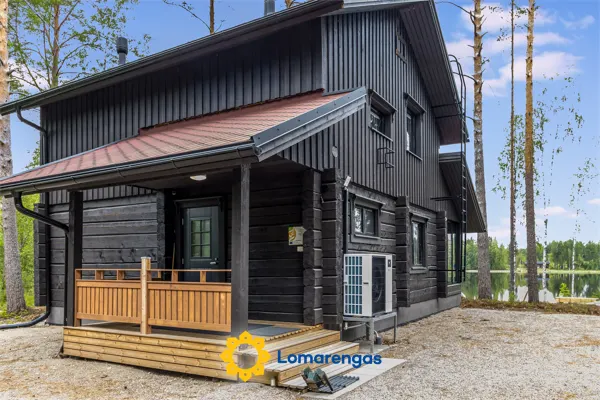
The classic Finnish way to stay is a rental cottage by a lake, usually with a sauna and often with a rowing boat. Cottages range from simple cabins to well-equipped holiday homes, and many are open all year. You can browse cottages with photos and prices in our cottage listing (the listing interface is in Finnish).
Hotels are found in Joensuu, at Koli and in Nurmes, and other towns have guesthouses, cottages and campsites. Valamo Monastery in Heinävesi also welcomes overnight guests all year round. In the national parks there are campsites and, in some parks, wilderness huts for hikers.
Karelian food
Karelian cooking is simple, filling and worth trying:
- Karjalanpiirakka (Karelian pasty): a thin rye crust folded around a filling of rice porridge, traditionally eaten warm with egg butter (munavoi). You will find them in bakeries, cafés and market halls.
- Karjalanpaisti (Karelian stew): pieces of different meats, typically beef and pork, slow-cooked in the oven for hours and served with potatoes and lingonberries.
Lake fish, forest berries and mushrooms also play a big part in local food. Joensuu market square is a convenient place to try pasties and other local snacks.
Plan your trip
A simple first visit could combine two or three days in and around Joensuu with two or three days at Koli or in a lakeside cottage. With more time, add Heinävesi for the monasteries and Kolovesi, or head north to Nurmes and Lieksa. Continue reading:
- Koli National Park – the national landscape above Lake Pielinen
- Joensuu city guide – the regional city and its sights
- Nature and hiking – national parks, trails and paddling
- Winter in North Karelia – snow, skiing and ice roads